
Search
Recent Comments
- PG on Who Is Tony Karon?
- Rigidonv on The Mayhem of GOP Class Politics in 2016
- groovy clock on Rice-Olmert-Abbas: End of the Affair
- Russia’s fanning of anti-Israeli sentiment takes dark detour into Holocaust denialism on What Is Rootless Cosmopolitan?
- Russia’s fanning of anti-Israeli sentiment takes dark detour into Holocaust denialism - Quick Telecast on What Is Rootless Cosmopolitan?
Category Archives: Guest Columns
How I Overcame My Jewish-Evangelical Upbringing and Learned to Love Christmas, Anyway

Guest Column: Gavin Evans Back in the day, when Gavin and I were young activists trying to change the world, the doorbell rang at our Observatory student house. I opened it to see a tall and handsome man in the silky purple shirt and dog collar of an Anglican Bishop. “You must be Tony,” said Bishop Bruce Evans. “I hope you’re going to make a mensch out of my son.” I was a little gobsmacked to hear +Bruce, as I came to know him, tossing out yiddish bon mots. But as his menschedik son relates here, many are the pathways of the lord, and all that….
The fundamentalist century
By Gavin Evans
So, Christmas and Hannukah have rolled past again, following in the wake of Eid and Diwali. Lots of celebrations all around and, perhaps, time to put a bit of religion back into the mix.
It is fitting to start with the obvious point that these festivals and commemorations are not all they seem. Take Christmas: the date of December 25 was chosen by the Romans sometime after 350 AD, probably to coincide with a pagan festival (and certainly not the birth date of the historical Jesus) – one of the many ways the Romans managed to wed Christianity with pre-existing Pagan traditions and beliefs. But Christmas only became prominent after Charlemagne was crowned on December 25, 800, and it took more than another millennium before the traditions of trees, and presents crept in (Queen Victoria and Charles Dickens did their bit) – and a bit longer before the North Pole Santa arrived. In other words, its connections with Christianity are tenuous, to say the least. It has become, essentially, a secular celebration – which is one of the reasons why I am happy to embrace its charms.
But this was not the way I grew up. I was raised on fundamentalism, and Christmas certainly wasn’t exempt. We were told the point wasn’t the actual date but rather that this was celebration of the birth of Jesus and that we give presents to remember that God gave his son for our salvation (I later discovered that other cultures – Spanish, for example – give their presents later as a celebration of the gifts given by the Three Wise Men). Continue reading
Posted in Guest Columns, Situation Report
25 Comments
Hell No, We Wouldn’t Go
Gavin Evans: The natural order of politics is that defunct organisations are bit like failed marriages: they just don’t get celebrated. Not so South Africa’s End Conscription Campaign Continue reading
Posted in Guest Columns
5 Comments
Bruce Springsteen at 60: A Personal Appreciation

Guest Column: My good friend Gavin Evans pays tribute to Bruce Springsteen, who proved to be a remarkable companion on Gavin’s emotional and political journey.
I always was a sucker for prolonged crushes, but this one, well, it has survived longer than most and is unlikely to fade: we’ve been through a lot together, you see. Time then to shout if from the rooftops (though, come to think of it, I haven’t exactly held back previously). So…. on your 60th birthday, take a bow, rock-n-roll’s finest lyricist.
Oh, I know there are other songwriters who possess wonderful ways with words but Bruce Springsteen is a lyricist of a different kind: a story-teller who spins yarns with a profundity few can match. Bruce’s writing hero is Philip Roth, but his own deceptively simple approach is closer to Raymond Carver: little stories about big things, and he tells them in the voice of characters on the edge, who embrace cliché only to turn it on its head, who feel at once unique and for all time.
Lyrics are not the same thing as poetry, and those who pretend they are – by, say, giving students Bob Dylan to read alongside WH Auden – are silly (I prefer the approach of the poet Simon Armitage, who gives Dylan to his students as an example of how not to write poetry). The need to relate words to tunes imposes restrictions that do not exist in poetry. Still, within these confines, Springsteen’s writing has so often expanded the horizons of its chosen form. Continue reading
The Pathologies of Israel’s Guilty Conscience
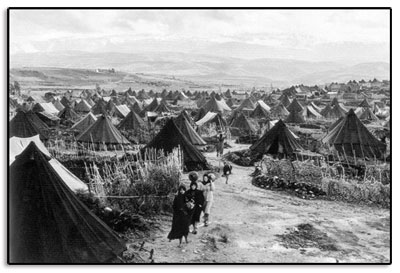
Guest Column: Eitan Bronstein
The proposal to legally bar the commemoration of the Nakba on Israel’s Independence Day reflects growing trepidation in Israel about the inevitable encounter with the Palestinian Nakba and the understanding that the Nakba is a foundational part of Israeli identity. Until recently, the threat of exposing the Nakba was barely felt. There was no need to fight this repressed demon, which might suddenly reveal itself and disrupt the seeming calm of a harmonious Jewish democracy. But the Nakba is not a demon, not the fruit of deceptive imagination, and therefore we should not underestimate the challenge facing Israeli society: to recognize Israel’s part in the expulsion of most of the Palestinian inhabitants of the land in 1948, the destruction of most of their localities (upwards of five hundred), the annihilation of urban Palestinian culture, and tens of massacres, rapes, incidents of looting, and dispossession. Looking into so dark a mirror takes courage and maturity, demonstrated in the research of such scholars as Morris, Gelber, Milstein, Khalidi, Pappe, and others, as well as in the diaries of Netiva Ben Yehuda and Yosef Nahmani.
It is not surprising that the “appropriate Zionist response,” to inscribe the forgetting of this human horror into law, comes from the circles of the political right-wing. They have always been more sincere in their racist attitudes toward Arabs in Israel, compared to the Left, which marketed to the world and to us its honest (yet illusory) longing for peace. Continue reading
Posted in Guest Columns, Situation Report
36 Comments
Evans: Confessions of a Teenage Marxist

Guest Column: Gavin Evans As the world lurches into an economic and social crisis that threatens the political stability of the the current global order, I can’t help thinking how I might have relished this moment in my misguided youth, when I imagined that capitalism, with its inherent injustices, was riddled with structural contradictions that would cause its collapse in the face of the triumphant march of the organized working class, the midwife of a new world order of rationality, equality and human progress and dignity. Like most of my peers, I outgrew the Marxist shibboleths of my youth in the last few years of my activist career in South Africa — the end of apartheid, which allowed for a revolutionary remaking of South African society, coincided with the end of the Cold War and the triumph of capitalist globalization. It would have taken epic leaps of fanatical faith to imagine that a centrally-planned command economy represented a viable alternative model; it’s failures were palpable and inescapable. So many of us quietly (sometimes noisily) renounced the illusions of our youth, embracing the sort of reformist social democratic outlook we had once despised with post-adolescent venom.
Still, even then, I never doubted for a moment that while we had been wrong about socialism, we had not been entirely wrong about capitalism: it could raise many people out of poverty and develop spectacular productive capacity where none had existed before, its creativity and ability to innovate were breathtaking, and, of course, it was the only game in town. And yet it also reinforced and deepened social inequality, and its free market was never going to take care of the basic needs of majority in society. The market was not going to feed and house the poor or provide the education and health systems that made for a stable society. Unregulated, capitalism was also prone to lurch from boom to bust, not least because of its fundamental inequalities. Capitalism was, to borrow from Churchill, the worst form of economic system except for all the others that had been tried.
With capitalism having once again revealed its flaws in the spectacular global financial meltdown of the past six months, and the Depression into which it appears to have plunged, I asked my good friend Gavin Evans, who recently lost his own web site to a technological glitch, to reflect on his own political and intellectual journey through Marxism, in light of the, uh, current crisis. (I haven’t used that phrase in about two decades…)
Israel Gets Real on Iran

Trita Parsi: In public, Israeli leaders have spoken in apocalyptic terms of Iran’s nuclear program, but among themselves, they know better. Continue reading
Why John Bolton is Right on Iran

Armageddon Man is unhappy with his President
Guest Column: Dr. Gary Sick
As usual, John Bolton is absolutely right. His policy prescriptions may be reckless to the point of foolishness (“When in doubt, bomb!”), but his understanding of what is happening in Washington policy (as outlined in his op-ed in the Wall Street Journal yesterday) is unerringly accurate.
While much of the world was hyper-ventilating over the possibility that the United States (and maybe Israel) were getting ready to launch a new war against Iran, Bolton was looking at the realities and concluding that far from bombing the US was preparing to do a deal with Iran. He had noticed that over the past two years the US had completely reversed its position that originally opposed European talks with Iran. Continue reading
Posted in Guest Columns, Situation Report
Tagged Bolton, Bush, Gary Sick, Iran, Israel, nuclear
31 Comments
Iraq and U.S. Faith in Violence

Guest Column: Alastair Crooke warns of a dangerous fantasy that persists in Western capitals in which the West faces an “onslaught” from “radical Islam.” The problem is that this intersects all too tragically with a the persistent belief in Washington and elsewhere that by applying its overwhelming advantage in military force, the U.S. can do good in the world and vanquish evil, bringing to bear the transformative impact of violence in the way that a Hollywood hero might. Continue reading
Posted in Guest Columns, Situation Report
14 Comments
Behind the Fall of “Fox” Fallon
 Guest Column: Mark Perry. When Admiral William “Fox” Fallon resigned, or was forced out, of his position as head of the U.S. military’s Central Command, responsible for Iraq and Afghanistan, and for Iran if there were any conflict with Iran, much of the speculation hinged over Fallon’s very public opposition to Washington’s saber-rattling at Tehran. It struck me, though, that there was something misleading and melodramatic in the media reports suggesting, like the Esquire piece that proved his undoing, that Fallon was somehow a lone voice of opposition, a singular hero obstructing a march to war with Iran, like the man putting his body in the path of the Tiananmen-bound tank from 1989’s most famous news photograph. The opposition to war with Iran being expressed by Fallon is shared, as far as I know, by the Joint Chiefs of Staff, and by Defense Secretary Gates himself. So, for some explanation of the dynamics at work, I turned to my friend Mark Perry, longtime defense and security analyst in Washington with his ear to the ground in the U.S. capital.
Continue reading
Posted in Guest Columns, Situation Report
31 Comments
South Africa’s Racist Present
Guest Column: Sean Jacobs. What to make of the racist torture incident at a South African campus Continue reading
Posted in Guest Columns, The Whole World's Africa
21 Comments