
The suggestion that doubts over the clearly crooked election process in Afghanistan somehow undermine the U.S. strategy there are missing the point: As I wrote here last week,
An inconclusive poll that fails to clearly legitimize the next government may not be a setback for the Obama Administration’s Afghanistan strategy. On the contrary, it could offer an important opportunity to remake a system of government so dysfunctional that it has enabled a massive Taliban resurgence.
When a broken bone heals badly, it often leaves doctors no option but to re-break and reset the limb in order to allow the bone to properly do its job. Long before Thursday’s election, U.S. officials had identified the Afghan political system — not simply the Karzai government, but the very manner in which the Afghan system created after the U.S. invasion is organized, and allocates power and resources — as an obstacle to the goal of defeating the Taliban. The key to the U.S. counterinsurgency strategy is to create security and development at the local level, establishing a system of governance that Afghans believe is worth fighting for. Plainly, nothing like that has happened on Karzai’s watch, and few had much confidence that a change of personality in the presidential palace would be enough to change the dynamic.
U.S. advisers had made clear that regardless of who won the election, Washington planned to use the leverage derived from the dependency of any Afghan on Western military and financial support to reorganize the way the country is governed — strengthening the capability of ministries to deliver services to the citizenry; eliminating corruption and cronyism; and reallocating power and resources away from the central government and towards provincial and local level administrators capable of promoting development and winning the hearts and minds of the population… The last thing the U.S. counterinsurgency effort needs is for Karzai to be returned on a winner-takes-all basis, owing countless political favors to local level warlords whose interests run counter to good governance — and using a popular mandate as a basis to resist U.S. efforts to weed out corruption and cronyism. An election outcome that puts a question-mark over the legitimacy of the next president could, paradoxically, actually suit the U.S. purpose. That’s because Afghanistan’s current system of government, in U.S. thinking, requires the proverbial re-break and reset in order to create a regime sufficiently responsive and accountable to its own citizenry to give the counterinsurgency campaign a better chance of defeating the Taliban.
The reports of a flaming row between Karzai and Richard Holbrooke, Obama’s pointman in Afghanistan, ought to be read in this context. The U.S. is pushing Karzai to accept a runoff race that he could lose, and even if he edges it, he’ll be under even greater pressure from the U.S. to share power with his rivals. The last thing Washington needs is for Karzai to emerge strengthened and confident, emboldened, like Iraq’s Nuri al-Maliki, to push back against the U.S. and take control of the script.
As I noted here,
But an election outcome that weakens the incumbent while leaving him in place may actually suit the US strategy in Afghanistan. American officials have, for the past three years, made clear that they see the Karzai government as a weak link in a strategy that depends, first and foremost, on delivering security, services and good governance to the areas targeted by the Taliban. That’s because the government is intimately associated, in the eyes of ordinary Afghans, with rampant corruption, warlordism, drug trafficking and a failure to deliver security, justice and basic services. The clear-eyed architects of the US counterinsurgency strategy have long recognised that the Karzai government offers little that Afghans would deem worth fighting for.
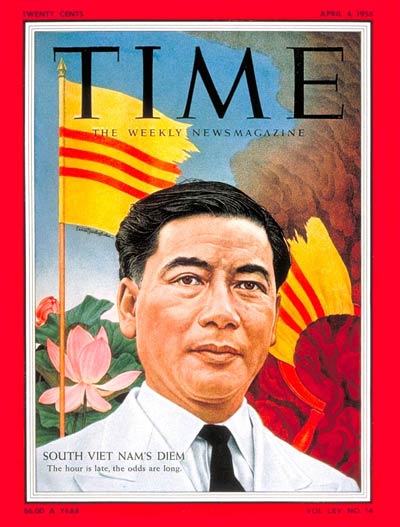
For some US commentators taking the long view, Mr Karzai has lately been likened to Ngo Dinh Diem, the South Vietnamese dictator who initially enjoyed Washington’s backing but whose regime was so brutal, corrupt and nepotistic that it was eventually deemed an obstacle to America’s goals and was overthrown in a coup with Washington’s backing.
Of course, there are limits to the Diem analogy, in no small part because the US has also recognised that there may be no credible alternative capable of rallying Afghans against the Taliban…
Actually, reports today that Western officials in Kabul are increasingly worried about Dr. Abdullah and his supporters threatening violence if Karzai is allowed to get away with electoral fraud underscore the point: Nothing would play into the Taliban’s hands better than what would be painted as a Tajik power grab (by Abdullah) in Kabul. Should Karzai be muscled out of power by the Northern Alliance, the Pashtun regions of Afghanistan will be irredeemably lost to the Taliban. Despite his failures, Karzai probably remains the best bet in the minds of U.S. strategists. But, continuing from my piece quoted earlier,
even if it was resigned to another five-year term for Mr Karzai, the US made clear before the election that it planned to use its own leverage – Kabul remains entirely dependent on foreign financial and military assistance – to reorder the way Afghanistan is governed. The talk in Washington has been of working around Mr Karzai and to strengthen those ministries best equipped to deliver and least plagued by corruption; of empowering provincial level administrators by bypassing the central government to funnel aid directly; and even pressuring Mr Karzai to accept the appointment of a technocrat like Mr Ghani as a “chief executive” to run the government.
Mr Karzai and those power brokers invested in the status quo were never going to willingly accept being shunted to the margins. Mr Karzai has grown strident in rejecting Washington’s tutelage, instead making common cause with some of the Afghan elements most detested by the Americans.
Given the precipitous decline in Afghanistan’s security and the growing risk of failure in what Mr Obama had always dubbed “the right war” (in contrast to Iraq), the last thing Washington needed was a buoyant Mr Karzai borrowing the tactics of Iraq’s prime minister Nouri al Maliki, who has pushed back against US strategy and taken control of the terms and timetable for the deployment of US forces in Iraq.
US military experts on the ground have made clear to Mr Obama that reversing the Taliban’s steady advance in Afghanistan will require a commitment measured in years, thousands more troops than the 68,000 he has already committed, a steady stream of US casualties and an economic cost of at least $4 billion a month. And even then, the chances of success are slim.
“Slim”, in fact, is an exaggeration.
14 Responses to Karzai as Diem in Obama’s Vietnam