

Continuing my series on the 50 “rabbis” (teachers) who most influenced my understanding of being Jewish in the world, I offer up three more to coincide with Israel’s Independence Day .
9. Avraham Burg
 Former Knesset Speaker Avraham Burg was a decorated paratrooper and the son of a prominent conservative cabinet minister before he played a prominent role in Peace Now and the anti-Lebanon war movement. But what got my attention was Burg’s passionate denunciation of the state of contemporary Israel from the perspective of a left-Zionist idealist: “The Israeli nation today rests on a scaffolding of corruption, and on foundations of oppression and injustice… There may yet be a Jewish state here, but it will be a different sort, strange and ugly… The Jewish people did not survive for two millennia in order to pioneer new weaponry, computer security programs or anti-missile missiles. We were supposed to be a light unto the nations. In this we have failed. It turns out that the 2,000-year struggle for Jewish survival comes down to a state of settlements, run by an amoral clique of corrupt lawbreakers who are deaf both to their citizens and to their enemies. A state lacking justice cannot survive.” And so on — read it, it’s a powerful piece. I don’t share Burg’s belief that Zionism itself can be redeemed. But I do share is conviction that Jewish identity is meaningless unless it serves a higher purpose, the purpose of universal justice. And he seems to feel the same way, writing in Haaretz last year that he finds Diaspora Jews who are committed to justice his natural allies rather than fellow Israelis who have turned their backs on it. Exactly. That’s the interesting conversation.
11. Uri Avnery
 On Yom Kippur in 1979, as a young Zionist of the socialist (and atheist) persuasion, I didn’t go to shul; instead I stayed home and read a book I’d found in the shelf of one of my madrichim (older leaders of Habonim): It was Uri Avnery’s “Israel Without Zionism,” and the effect it had was profound. My misgivings about Zionism had been growing, not only because its narrow nationalist concerns seemed at odds with the universal justice that I saw as its purpose, but also because I was better acquainted with its history. In Habonim we knew about events like the Deir Yassin massacre, and didn’t try to hide from them. They were the work, after all, of the Irgun/Likud/Betar, whom we deemed dangerous fascists. But we clung to the idea that our side, the Haganah/Labor side, had remained pure and noble. The Betarim laughed at us; how did we think Israel would have had a Jewish majority were it not for events like Dir Yassin scaring the Palestinians into fleeing? And here came Uri Avnery recounting the same stories, and more, giving the lie to the “miracle” in which 700,000 people simply walked away from their homes in response to Arab radio broadcasts urging them to leave. Avnery chronicled the ethnic cleansing activities of his own unit. And he offered a vision of a union with the Arab world, which later inspired him to be one of the founders of the Israeli peace movement. Definitely more useful than a day spent in shul watching the alte kakkers sniffing snuff to keep themselves awake… Avnery established, for me, the principle that to recognize the truth of Israel’s history, and to renounce Zionism, was not somehow to betray my Jewishness. He was the first Israeli I read saying Israel could not deny the pain it had inflicted on others; facing up to it and acknowledging it was, in fact, the Jewish thing to do.
20. Martin Buber
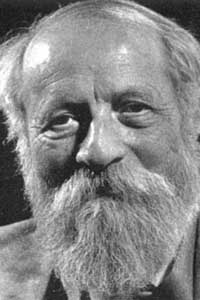 The early Zionist philosopher who moved to Palestine in 1938 was one of the most prominent advocates, in the years immediately before Israeli statehood, of the idea of a single, binational state for Jews and Arabs founded on the basis of equality. The partition of Palestine, he said, could only be achieved and sustained by violence, which he abhorred. For Buber, the Zionist idea was premised on it fulfilling the Biblical injunction to be a moral “light unto the nations.” But he could already sense that the dominant strain in the Zionist movement was the opposite, and would have the effect, at great moral cost, of simply trying to make the Jews a nation like any other. In this schema of “normalization,” the Jews simply had to acquire a territory and a common language, and the rest would take care of itself. He saw this as a reflection of a longstanding tension inside Judaism: The powerful injunction to make the pursuit of truth and justice the very purpose of Judaism, and he wrote, “the natural desire, all too natural, to be ‘like the nations.’ The ancient Hebrews did not succeed in becoming a normal nation. Today, the Jews are succeeding at it to a terrifying degree.” He advocated Jews and Arabs creating a single democratic state in Palestine in 1948. And he warned that those who pursued sovereignty for a Jewish majority state of Israel were making war inevitable. Referring to the Arab population of Palestine, he asked, “what nation will allow tiself to be demoted from the position of majority to that of a minority without a fight?” He warned that the the path taken in 1948 would extinguish the progressive potential of his idealistic Zionism. Which it did. The moral idealism at the center of the old left-Zionist ideology did not survive contact with the living, real population of Palestine. Buber had the courage and prescience to recognize that and warn the Zionist movement of the moral cul-de-sac down which it was heading.
30 Responses to Three ‘Rabbis’ for Israel’s Independence Day